Introduction
Ares, the legendary God of War, is known for his unmatched strength, brutal combat skills, and unstoppable rage. As one of the most feared Olympian gods in Greek mythology, he appeared almost invincible to his enemies. However, even the strongest warriors have weaknesses, and Ares was no exception. Behind his immense power were several flaws that could be exploited by his opponents.
In this guide, we will explore what were Ares’ weaknesses, including his physical vulnerabilities, personality flaws, strategic mistakes, and the reasons behind his downfall. Whether you are interested in Greek mythology or the God of War universe, understanding Ares’ weak points reveals why the mighty God of War was not truly unbeatable.
Who Was Ares?
Ares was the Greek god of war, son of Zeus and Hera. He represented the brutal, chaotic side of battle rather than calm military strategy. Ancient Greeks respected his power but rarely admired him, and that gap between fear and respect tells you a lot about his character.
Unlike Athena, who symbolized wisdom in war, Ares symbolized raw violence. He loved conflict for its own sake, not for any noble cause. This difference shaped almost everything people thought about him.
When historians and storytellers ask what were Ares weaknesses, they usually start here. His identity was built entirely around aggression, and that single focus left him exposed in nearly every other area of life. He had no patience, no real allies, and no interest in anything beyond combat.
You can already sense the irony. A god of war who struggled to win respect, even from his own family. That irony becomes clearer as you look closer at his specific flaws.
Many people assume that being a god automatically means being flawless, but Ares proves otherwise. The deeper you dig into what were Ares weaknesses, the more you realize his myths were partly designed as warnings. Greek storytellers used him to show what happens when raw power exists without discipline.
Impulsive Nature
If you had to summarize what were Ares weaknesses in one word, impulsiveness would top the list. Ares acted first and thought later, every single time. He rushed into battles without checking the terrain, the enemy’s numbers, or even his own odds of survival.
Almost every list of what were Ares weaknesses begins with this trait, and for good reason.
This impulsive streak made him predictable. Enemies and rivals learned that if they provoked him, he would charge in blindly. That kind of behavior might look powerful, but it actually works against you in any serious conflict.
Here is a quick breakdown of how his impulsiveness played out:
- He entered fights based on emotion, not logic.
- He ignored warnings from other gods.
- He often fought without a clear goal beyond violence itself.
- He reacted to insults instantly, giving enemies an easy way to manipulate him.
You can see why people questioning what were Ares weaknesses often land on this trait first. Impulsiveness is not bravery. It is a lack of self control, and Ares had very little of it.
Why This Mattered in Mythology
In several myths, Ares jumped into conflicts that had nothing to do with him, simply because the fighting excited him. This habit made him useful to no one, since allies could never predict what he would do next. Even Zeus, his own father, openly criticized this behavior.
His Affair with Aphrodite as an Example
One famous story often used to illustrate what were Ares weaknesses involves his secret relationship with Aphrodite. Even though Aphrodite was married to Hephaestus, Ares pursued her without thinking about consequences. Hephaestus eventually trapped the two with a clever net, embarrassing Ares in front of the other gods.
This story is a perfect example of impulsiveness leading directly to humiliation. Ares wanted what he wanted, and he acted on that desire without any thought for risk or reputation. It shows how his personal life mirrored his battlefield habits perfectly.
Lack of Strategy
Another major answer to what were Ares weaknesses involves his complete lack of strategy. War is not only about fighting. It is about timing, planning, and using resources wisely. Ares ignored all of that.
Time and again, what were Ares weaknesses boiled down to one simple problem: he never thought ahead.
He preferred raw force over clever tactics. While Athena studied her opponents and planned multiple steps ahead, Ares simply charged forward and hoped strength would carry him through. This worked sometimes, but it failed often, especially against smarter opponents.
Think about it this way. You can have the sharpest sword in the world, but without a plan, you are just swinging it blindly. That was Ares in almost every major myth involving conflict.
A few examples highlight this weakness clearly:
- He often fought without checking if allies were nearby to support him.
- He underestimated enemies who relied on intelligence rather than force.
- He repeated the same aggressive approach even after it failed before.
If you compare him to Athena, the contrast becomes obvious. She represented strategic warfare. He represented chaos. When people study what were Ares weaknesses, this lack of strategic thinking always becomes one of the clearest examples.
This is also why so many ancient writers paired him with Athena in their stories. Putting the two side by side made the lesson obvious. One god planned and won. The other charged and often lost. Comparing them is still one of the easiest ways to explain what were Ares weaknesses to someone new to Greek mythology.
Overconfidence
Overconfidence sits right at the center of what were Ares weaknesses. Ares believed his strength made him untouchable. That belief blinded him to real dangers around him.
No discussion of what were Ares weaknesses feels complete without mentioning how badly his pride worked against him.
This kind of pride is common in mythology, but Ares took it further than most. He assumed that physical power alone guaranteed victory, ignoring the fact that wisdom, trickery, and teamwork often beat brute force.
You probably know people like this in real life too. Someone who relies only on their biggest strength and forgets to build anything else. That mindset eventually catches up with everyone, gods included.
Some clear signs of his overconfidence include the following.
- He challenged opponents without studying their abilities.
- He dismissed warnings about stronger or smarter enemies.
- He assumed his reputation alone would scare others away.
- He rarely adjusted his approach even after losing.
This overconfidence directly connects to his impulsiveness and lack of strategy. Together, these traits explain why Ares struggled despite being one of the strongest gods on Olympus. Anyone exploring what were Ares weaknesses will notice how these flaws constantly feed into each other.
I think this is the part people relate to most. We all know that feeling of being so sure of ourselves that we skip the planning step entirely. Ares never seemed to learn from this mistake, and that repetition is a big reason why his name comes up so often whenever someone asks what were Ares weaknesses.
Emotional Weakness
When you ask what were Ares weaknesses, emotional instability deserves serious attention. Ares let his emotions control his decisions far too often. Anger, jealousy, and wounded pride pushed him into situations he should have avoided.
Emotional control is often missing from lists of what were Ares weaknesses, yet it shaped almost everything he did.
Unlike gods who balanced emotion with reason, Ares rarely paused to think. He reacted instantly, and that reaction usually came from anger rather than logic. This made him easy to provoke and even easier to defeat.
Mortals and gods alike noticed this pattern. If you wanted to distract or weaken Ares, you simply needed to anger him. He would charge straight into a trap without questioning it.
Here are a few emotional triggers that consistently affected him.
- Insults to his pride
- Jealousy over Aphrodite’s affections
- Frustration when losing a fight
- Anger toward gods who outsmarted him
This emotional weakness made him unreliable, even to those who might have wanted him as an ally. People could predict his behavior simply by understanding his emotional triggers, which is never a good position for a god of war to be in.
In many ways, this emotional fragility is the most human part of his character. It makes him relatable, even likable in a strange way, despite his violent reputation. When you look at what were Ares weaknesses through this lens, you start to see him less as a monster and more as a flawed personality, similar to people you might know in real life.
Defeats by Other Gods and Heroes
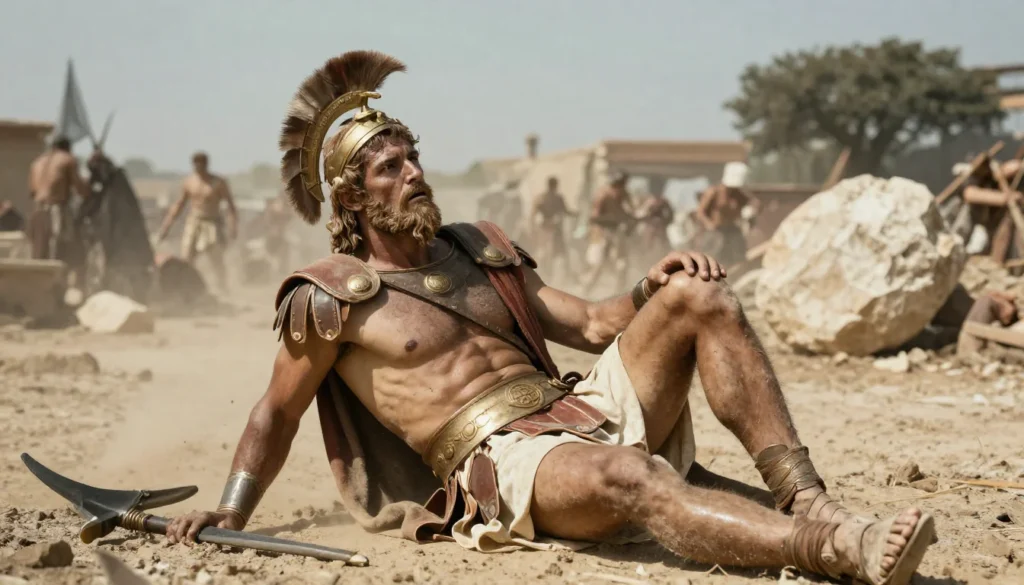
Perhaps the most direct evidence of what were Ares weaknesses comes from his actual defeats. Despite being a god, Ares lost fights to other gods and even mortal heroes. These losses were not flukes. They were patterns rooted in his core flaws.
If you are still wondering what were Ares weaknesses truly looked like in practice, his battle record speaks louder than any description could.
Athena defeated him more than once, using strategy instead of strength. Heracles also overpowered him during certain myths, showing that mortal heroes could outsmart and outfight him when prepared properly. Even some accounts describe him being wounded or trapped due to his own carelessness.
Let’s break down a few notable examples.
- Athena vs Ares: Athena consistently outsmarted him by using tactics rather than raw force.
- Heracles vs Ares: Heracles’ strength and preparation overcame Ares’ aggression.
- Otus and Ephialtes: According to some myths, these giants managed to trap Ares, proving that even his physical power had limits.
These defeats highlight a simple truth. Strength without strategy eventually fails. Anyone researching what were Ares weaknesses will find these stories repeated across multiple sources, reinforcing the same message every time.
What These Losses Reveal
Each defeat shows a different side of his vulnerability. Sometimes it was poor planning. Sometimes it was emotional provocation. Other times it was simple overconfidence. Together, these patterns make it clear why Ares struggled to maintain respect despite his raw power.
These stories matter because they were not random. Ancient storytellers repeated the same lesson again and again through different myths. Whenever someone asks what were Ares weaknesses, these defeats provide the clearest, most concrete proof available. Strength alone never saved him, and the myths make that point on purpose.
Unpopularity Among the Gods
You cannot fully understand what were Ares weaknesses without looking at how other gods viewed him. Ares was widely disliked on Olympus. Even Zeus expressed open frustration with his son’s behavior.
This unpopularity is another piece of the puzzle behind what were Ares weaknesses, since reputation in mythology often shapes how a character is remembered.
His love for chaos made him unpredictable, and unpredictability rarely earns trust. Gods who valued order, wisdom, or diplomacy avoided working closely with him. His reputation for violence overshadowed any potential value he might have offered as an ally.
A few reasons explain this unpopularity clearly.
- He caused unnecessary conflicts among gods and mortals.
- He showed little respect for diplomacy or peaceful solutions.
- He often sided with whoever offered the most exciting battle, not the most just cause.
- His emotional outbursts made him difficult to work with.
This unpopularity reinforced his isolation, which in turn worsened his other weaknesses. Without allies to balance his impulsiveness or guide his decisions, Ares repeatedly walked into situations that damaged his reputation further. When people study what were Ares weaknesses today, this social isolation often gets overlooked, yet it explains so much about his repeated failures.
Think about how isolation works for anyone, not just gods. Without honest feedback from people around you, bad habits never get corrected. Ares had no one close enough to push back on his impulsiveness or his temper, and that absence of support is a quiet but powerful answer to what were Ares weaknesses.
How These Weaknesses Connect
It helps to see these flaws as a connected system rather than separate issues. His impulsiveness fed his lack of strategy. His overconfidence blinded him to real threats. His emotional instability made him easy to manipulate. And his unpopularity left him without support when things went wrong.
This is really the heart of what were Ares weaknesses. None of these flaws existed alone. Each one made the others worse.
I find this pattern fascinating because it mirrors real human behavior. Strength alone rarely guarantees success. Without self control, planning, and the support of others, even the most powerful figure can fail repeatedly. Ares stands as a mythological reminder of that timeless lesson.
If you have ever wondered why ancient storytellers focused so much on his flaws rather than his battles, this connection might be the answer. They were not just telling war stories. They were exploring what happens when power exists without wisdom.
Looking back across every section, you can see that what were Ares weaknesses is never really one simple answer. It is a web of related flaws, each one feeding the next. That complexity is exactly why his character has lasted so long in stories, books, and even modern pop culture.
Lessons We Can Learn From Ares
Even though Ares lived in myths written thousands of years ago, his story still feels relevant. You probably know someone who relies only on confidence and skips planning entirely. That person eventually struggles, just like Ares did.
Reflecting on what were Ares weaknesses also reminds you that no amount of raw talent replaces good judgment.
Studying what were Ares weaknesses gives you more than mythology trivia. It gives you a mirror. Power without patience rarely lasts. Strength without strategy rarely wins. And confidence without self awareness rarely earns respect.
Here are a few practical lessons drawn from his story.
- Plan before you act, even when you feel confident.
- Manage your emotions instead of letting them manage you.
- Build real allies instead of relying only on your own strength.
- Learn from losses instead of repeating the same mistakes.
These lessons explain why what were Ares weaknesses continues to be such a popular topic among mythology fans and casual readers alike. His flaws feel surprisingly modern, even though his story is ancient.
Conclusion
So, what were Ares weaknesses in the end? They were not about physical limits. They were about character. His impulsiveness, his lack of strategy, his overconfidence, his emotional instability, his repeated defeats, and his unpopularity among the gods all combined to create a figure who was powerful yet deeply flawed.
Understanding what were Ares weaknesses gives you a fuller picture of Greek mythology beyond simple stories of strength. It shows you that even gods face consequences when they ignore wisdom and self control. Looking back, what were Ares weaknesses if not a reminder that power needs balance to truly last? What do you think made Ares such a compelling yet flawed character? Share your thoughts, and if you found this breakdown helpful, pass it along to anyone who loves digging into Greek mythology.
FAQs
Here are some quick answers to common questions people ask about what were Ares weaknesses.
What were Ares weaknesses according to Greek mythology? Ares struggled with impulsiveness, poor strategy, overconfidence, emotional instability, and a lack of allies among the gods.
Did Ares ever lose a fight? Yes, Ares lost battles to Athena and Heracles, among others, often due to his lack of planning and emotional reactions.
Why did other gods dislike Ares? Many gods saw him as chaotic and unpredictable, which made him difficult to trust or work with on Olympus.
Was Ares stronger than Athena? Physically, Ares may have matched or exceeded Athena’s strength, but her strategic mind consistently gave her the advantage in conflicts.
What made Ares different from other war gods? Ares represented raw, chaotic violence, while gods like Athena represented disciplined, strategic warfare.
Did Ares have any allies among the gods? Ares had very few close allies, largely due to his unpredictable temper and constant pursuit of conflict.
How did Ares’ emotions affect his decisions? His emotions, especially anger and jealousy, often pushed him into impulsive actions that worked against his own interests.
Why is understanding Ares weaknesses important today? It shows how strength without strategy, patience, or emotional control often leads to repeated failure, a lesson still relevant now.
About the Author
Sarah Mitchell is a mythology writer and history enthusiast with a passion for exploring ancient Greek legends through a modern lens. She enjoys breaking down complex mythological figures into clear, relatable stories that help readers connect with history in a meaningful way.
Also read aresgodofwar.co.uk
Email: johanharwen314@gmail.com
Author Name: Sarah Mitchell