









 johnharwen314@gmail.com




Ares God of War: The Powerful Yet Feared Greek Deity
Introduction
Think of the most terrifying force on a battlefield. Now imagine that force is not an army, not a weapon, but a god. That is Ares, god of war, in a single image. He is loud, brutal, passionate, and completely unstoppable once his blood is up. And yet, despite being one of the twelve Olympians, the ancient Greeks feared him more than they worshipped him.
Ares stands apart from every other deity in the Greek pantheon. He does not represent strategy or justice or wisdom. He represents the raw, chaotic, and bloody reality of combat. You will find him on every battlefield, on every shield painted with his face, and in every war cry screamed by a soldier who has nothing left to lose.
In this article, you will discover who Ares really is. You will explore his family background, ares god of war powers, his legendary rivalry with Athena, his surprising love life, his symbols, and how this ancient deity continues to shape modern culture today. By the end, you will understand why Ares is one of the most complex and fascinating figures in all of greek ares god of war mythology.
Who Is Ares? The True Face of War
Ares is the ancient Greek god of war. He is one of the twelve Olympian gods and the son of Zeus and Hera, the king and queen of the gods. While many deities in Greek mythology carry dual roles, Ares has one clear purpose. He personifies warfare in its most brutal and primal form.
He does not represent military strategy or noble battle. Other gods handle that side of conflict. Ares represents the chaos, bloodshed, and violence that war actually brings. That is why he was both respected and deeply feared throughout the ancient world.
The Romans later adopted Ares and gave him a new name: Mars. But there is an important difference. The Romans elevated Mars to a dignified national deity and considered him the father of Rome. The Greeks, on the other hand, kept Ares at arm’s length. They acknowledged his power but rarely celebrated it.
Early Life of Ares: A God Born From Conflict
The Birth of Ares
Ares was born to Zeus and Hera on Mount Olympus. His birth alone set the tone for his existence. Zeus and Hera were not a harmonious couple. Their relationship was turbulent and often bitter. Some ancient sources suggest that Ares absorbed the tension and conflict of his parents’ marriage from the very beginning.
One lesser-known myth actually claims that Hera conceived Ares without Zeus, using a magical herb given to her by the goddess Flora. In this version, Ares was born purely from his mother’s will and magic, making him an expression of Hera’s own power and frustration. Whether that version is accurate or not, it adds a fascinating layer to his origin.
Childhood and Education
Unlike many Olympian gods, Ares does not have a detailed childhood narrative in classical texts. What we do know is that he was raised on Olympus. He trained in warfare and combat from a young age. His nature was violent and confrontational almost from birth, which made him one of the more difficult gods for Zeus to manage.
He was also briefly captured as a child. The twin giants Otus and Ephialtes once imprisoned him in a bronze jar for thirteen months. Hermes eventually rescued him. That episode hinted at a vulnerability beneath his fierce exterior.
Ares’ Family Background: Gods, Siblings, and Children
His Divine Parents
Ares was the legitimate son of Zeus and Hera. That made him one of the few Olympians with two divine parents who were also king and queen of the gods. Despite that prestigious lineage, he was not particularly beloved by his father.
Zeus openly admitted in Homer’s Iliad that Ares was his least favourite child. Zeus called him the most hateful of all gods who held Olympus. That rejection shaped Ares deeply. It explains why he was so often angry, aggressive, and desperate to prove his worth through warfare.
His Siblings
Ares had several notable siblings, including:
- Athena, goddess of wisdom and strategic warfare
- Hephaestus, god of fire and the forge
- Apollo, god of the sun, music, and prophecy
- Artemis, goddess of the hunt
- Hermes, messenger of the gods
- Dionysus, god of wine and festivity
His relationship with Athena was the most defining sibling rivalry in Greek mythology. With Hephaestus, things were even more complicated, as they both loved the same goddess, Aphrodite.
His Children
Ares fathered many children, and most of them reflected his violent nature. His most notable children include:
- Phobos (Fear) and Deimos (Dread), his twin sons who rode into battle with him
- Eros, the god of love, born from his union with Aphrodite
- Harmonia, the goddess of harmony, also born from Aphrodite
- Anteros, the god of requited love
- Cycnus, a violent son who was killed by Heracles
- Diomedes of Thrace, the owner of man-eating horses
It is worth noting the contrast here. The god of war also fathered Eros, the god of love, and Harmonia, the goddess of harmony. That tells you Ares was far more complex than he first appears.
Role in Greek Mythology: War, Chaos, and Courage
Ares played an active role in many of the most important stories in Greek mythology. He never sat on the sidelines of conflict. He charged into it headfirst.
Ares in the Trojan War
His most prominent role came during the Trojan War, the central conflict of Homer’s Iliad. Ares fought on the side of the Trojans, partly because Aphrodite, his lover, supported that side. He clashed repeatedly with Greek heroes and other gods.
In one famous episode, the Greek hero Diomedes wounded Ares with the help of the goddess Athena. Ares screamed in pain so loudly that it shook the earth like the sound of ten thousand soldiers. He retreated to Olympus to complain to Zeus, who showed very little sympathy. That scene captures perfectly how the Greeks viewed Ares: terrifyingly powerful but ultimately not invincible.
Ares and the Trial of the Areopagus
One of the most important mythological stories involving Ares is the murder trial of Halirrhothius. When this son of Poseidon assaulted Ares’ daughter Alcippe, Ares killed him in revenge. Poseidon dragged Ares before a divine tribunal on a hill in Athens. The gods gathered to judge him. Ares was ultimately acquitted.
That hill in Athens later became known as the Areopagus, which translates literally as the Hill of Ares. It became Athens’ most important court for serious criminal cases. That is a remarkable legacy for a god more associated with chaos than justice.
Ares God Of War Powers and Abilities: What Makes Him Truly Dangerous
Ares was not the most powerful god in Olympus, but he was one of the most dangerous on a battlefield. His abilities were specific, intense, and terrifying in the right context.
Physical Power
Ares possessed superhuman strength that surpassed virtually every mortal and most divine beings. He could throw spears with enough force to split mountains. He could shout so loudly that armies scattered in panic. His physical endurance was unlimited. He never tired in battle.
Battle Frenzy
His most unique ability was the power to induce battle frenzy. When Ares entered a battlefield, he changed the psychological state of every soldier around him. Combatants became more aggressive, more reckless, and more bloodthirsty. Some ancient sources describe this as a kind of divine madness that spread through armies like a contagion.
Immortality and Healing
Like all Olympian gods, Ares was immortal. He could be wounded, as Diomedes proved, but he healed instantly. His divine blood, called ichor, flowed golden rather than red. Wounds that would kill any mortal closed in seconds on his body.
Companions and Retinue
Ares never entered battle alone. He was always accompanied by:
- Phobos (Fear)
- Deimos (Dread)
- Eris (Discord)
- Enyo (the goddess of destructive war)
Together they formed a fearsome entourage that preceded every battle.
Ares vs Athena: The Ultimate Divine Rivalry
The rivalry between Ares and Athena is one of the defining conflicts in Greek mythology. On the surface, they both represent war. But look closer and you see they represent completely opposite philosophies of conflict.
What Sets Them Apart
Ares represents brute force, rage, and the chaos of combat. Athena represents intelligence, strategy, discipline, and the art of winning a war with your mind rather than just your muscles.
The ancient Greeks overwhelmingly preferred Athena. She was the patron goddess of Athens, their greatest city. She helped heroes like Odysseus and Perseus through wisdom and cunning. Ares just charged in and caused destruction on all sides.
Their Clashes in Myth
The two gods clashed directly multiple times. In the Iliad, Athena twice helped Greek warriors wound Ares in battle. She guided Diomedes’ spear to strike Ares and drove another weapon into him herself during a later confrontation. Each time, Ares came off worse despite being physically stronger.
That pattern carries a message. The Greeks believed that strategy beats brute strength every single time. Athena winning consistently over Ares was not accidental. It was a cultural statement about the kind of war that leads to victory versus the kind that just leads to destruction.
Symbols of Ares: What He Carried and Represented
Every major Greek deity had a set of symbols that represented their domain. Ares had some of the most immediately recognisable in the entire pantheon.
His Primary Symbols:
- Spear: His weapon of choice, representing offensive aggression
- Shield: Representing martial defence and the armour of war
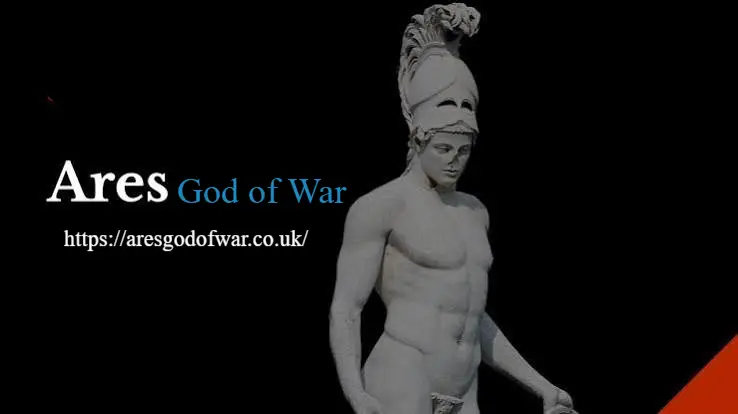
- Helmet: The most iconic symbol of ares god of war of a warrior in ancient Greece
- Sword: The weapon of close-quarters combat
- Torch: Representing the fires of war and destruction
- Chariot: He rode a golden war chariot pulled by fire-breathing horses
His Sacred Animals:
- The vulture, because it fed on the bodies of the fallen
- The woodpecker, which was considered a sacred bird of war in ancient Italic cultures
- The barn owl in some regional traditions
- The serpent in certain artistic representations
His Sacred Plants:
- The oak tree, which symbolised strength and endurance
His symbols appear throughout ancient Greek art, architecture, and coinage. You can find his spear and helmet on shields, pottery, and temple friezes across the ancient world.
Ares in Ancient Greece: Worship, Temples, and Cultural Impact
Despite being feared rather than loved, Ares did receive worship across the ancient Greek world. His cult was most active in regions known for their warrior culture.
Where He Was Worshipped
Sparta, the city-state that produced Greece’s most fearsome soldiers, venerated Ares above almost all other gods. Spartan warriors prayed to Ares before battle and offered him sacrifices for victory. That makes sense. A culture built entirely around military excellence would naturally gravitate toward the god who represented raw martial power.
Thrace, the region north of mainland Greece, was considered the home of Ares by many ancient writers. Thracians were known as fierce warriors and Ares was embedded deeply in their religious culture.
Athens tolerated Ares but did not celebrate him. The Athenians used the Areopagus hill that bore his name for judicial proceedings, giving the god of war an ironic association with law and order.
Temples and Sanctuaries
The most significant temple dedicated to Ares stood in the Ancient Agora of Athens. It was a large Doric temple originally built during the fifth century BC. Archaeological remains of this temple still exist today. Sparta had an unusual sanctuary to Ares where the god was depicted in chains, symbolising war kept under civic control.
Ares’ Love Story: The Affair With Aphrodite
Of all the stories surrounding Ares, none is more famous or more human than his love affair with Aphrodite. She was the goddess of love and beauty. He was the god of war. On paper, they should not have worked at all. But they did, passionately and scandalously.
The Great Affair
Aphrodite was married to Hephaestus, the god of the forge. The marriage was arranged by the gods and was never a love match. Aphrodite found what she wanted in Ares. Their affair was an open secret on Olympus.
Eventually, Helios the sun god observed the two lovers together and reported back to Hephaestus. The wronged husband devised a brilliant trap. He forged an invisible but unbreakable net of gold and suspended it above the bed where Ares and Aphrodite met. When they came together again, the net fell and trapped them in an embrace they could not break.
Hephaestus then called all the Olympian gods to witness the humiliated couple. The gods arrived, looked at the scene, and most of them laughed. Hermes reportedly joked that he would not mind being in Ares’ position, nets and all, if it meant being with Aphrodite. The goddesses reportedly stayed away out of modesty.
Children of Ares and Aphrodite
Despite the scandal, their relationship produced significant offspring:
- Eros, the winged god of love
- Anteros, the god of requited love
- Phobos, the personification of fear
- Deimos, the personification of dread
- Harmonia, the goddess of harmony and concord
The fact that two of love’s most important figures, Eros and Harmonia, were born from the union of war and love says something profound about how the Greeks understood human emotion.
Ares in Modern Culture: From Ancient Myth to Pop Culture Icon
Ares never truly left human consciousness. He simply changed his costume. Today you encounter the god of war in video games, films, comic books, television series, and literature almost constantly.
Video Games
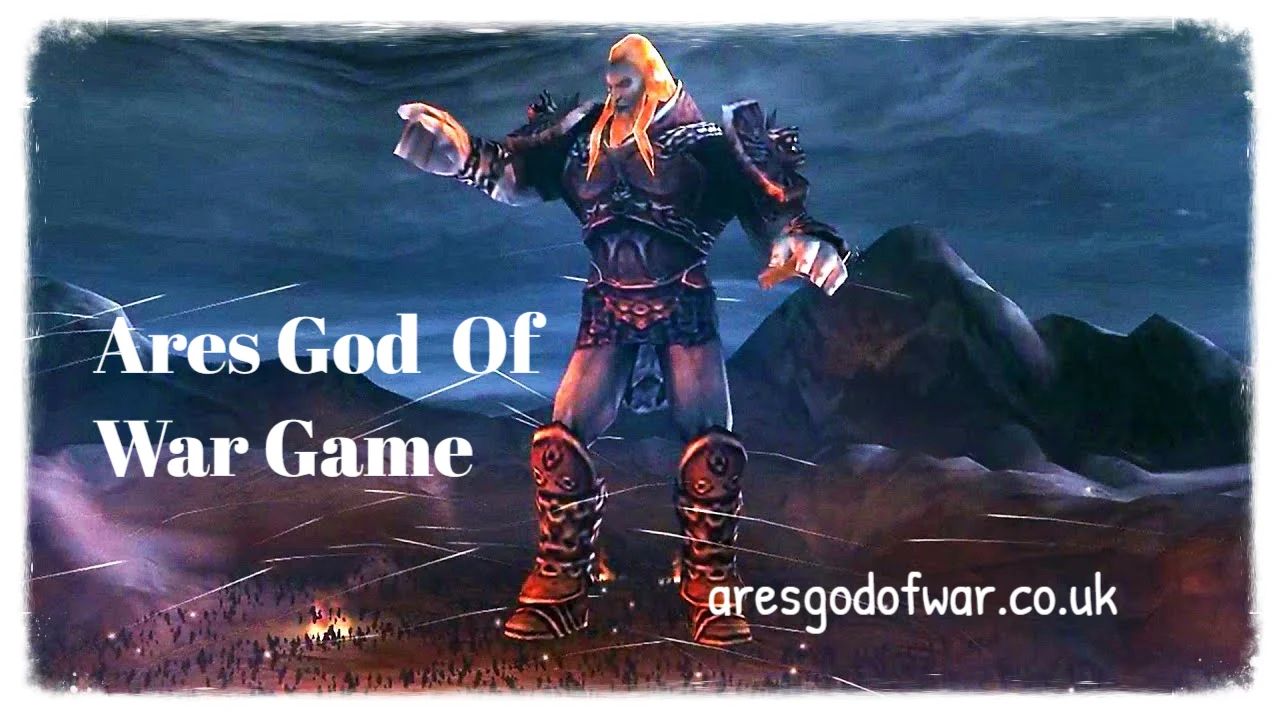
The God of War franchise built an entire gaming universe around Ares. In the first ares god of war game (2005), Ares serves as the main antagonist. He is depicted as a towering, monstrous deity of chaos who is ultimately defeated by the Spartan warrior Kratos. That game introduced millions of players worldwide to greek mythology ares god of war in a visceral and unforgettable way.
Ares God of War Characteristics
Ares, the Greek god of war, is known for his strength, aggression, courage, and love of battle. Unlike Athena, who represents strategic warfare, Ares symbolizes the chaotic and violent side of combat. His bold and fearless nature made him one of the most powerful gods in Greek mythology. Source: Wikipedia.org
Film and Television
Ares appears as a major villain in the 2017 Wonder Woman film, portrayed by David Thewlis. In that story, Ares is not simply a warrior but a manipulator who whispers into human ears and encourages them toward war. That portrayal is actually quite faithful to certain ancient interpretations of the god.
In the television series Xena: Warrior Princess, Ares appeared regularly as a morally complex antagonist and occasional ally. His character explored the tension between war and love, destruction and honour.
Literature and Comics
Ares appears as a villain in Rick Riordan’s Percy Jackson and the Olympians series, which introduced a new generation of young readers to Greek mythology. In Marvel Comics, he appears as both a villain and a member of the Avengers. DC Comics features him as one of Wonder Woman’s primary antagonists. Source: Wiki

Interesting Facts About Ares God Of War
Here are some details that most people do not know about the god of war:
- Ares was the only Olympian god whom Zeus openly admitted to disliking.
- He was wounded by the mortal hero Diomedes with help from Athena, one of the few times a god was harmed by a human.
- His sacred metal was iron, the material most commonly used to make weapons.
- In Sparta, a statue of Ares was kept in chains to symbolise that the spirit of war should never leave the city.
- The planet Mars is named after his Roman equivalent, Mars.
- The month of March is also named after Mars, which is why spring, the traditional season for resuming military campaigns, carries his name.
- The Areopagus hill in Athens, one of history’s first courts of law, is literally named the Hill of Ares.
- Ares fathered at least fifteen children with various goddesses and mortal women.
- He was one of the few gods who consistently showed loyalty and genuine affection, particularly toward Aphrodite and his children.
- Despite being the god of war, Ares was physically wounded more often in myth than almost any other Olympian.
Conclusion
Ares, god of war, is one of the most misunderstood figures in the entire Greek pantheon. People often dismiss him as a simple brute, a one-dimensional deity of violence with nothing deeper to offer. But when you look at the full picture, you see something far more interesting. You see a god who was rejected by his father, who loved passionately and scandalously, who fathered both fear and harmony, and who continued to inspire awe and dread for thousands of years after his culture faded.
He reminds you that war is not glorious or clean or strategic. It is loud, terrifying, and deeply human. That is exactly what Ares represented then, and it is exactly what makes him still relevant today.
What do you find most fascinating about Ares? Is it his rivalry with Athena, his love affair with Aphrodite, or his continued presence in modern pop culture? Share this article with a mythology lover in your life and start the conversation.
Frequently Asked Questions (FAQs)
Q1: Who is Ares, the god of war? Ares is the ancient Greek god of war and one of the twelve Olympians. He is the son of Zeus and Hera and represents the violent, chaotic side of battle rather than military strategy.
Q2: What are Ares’ powers? Ares possesses superhuman strength, immortality, the ability to heal instantly, and the power to induce battle frenzy in soldiers around him. He is one of the most physically powerful gods in Greek mythology.
Q3: Who are Ares’ parents? His parents are Zeus, king of the gods, and Hera, queen of the gods. He is one of the few Olympians born to both divine parents on Mount Olympus.
Q4: What is the difference between Ares and Athena? Both are war gods but they represent opposite approaches. Ares represents raw violence and chaos. Athena represents wisdom, strategy, and discipline. In mythology, Athena consistently outsmarts and defeats Ares despite his greater physical power.
Q5: What are the symbols of Ares? His main symbols are the spear, helmet, shield, sword, and torch. His sacred animals include the vulture and the woodpecker. His sacred metal is iron.
Q6: Who did Ares love? Ares had a famous and passionate love affair with Aphrodite, the goddess of love and beauty, who was married to Hephaestus. Together they had several children including Eros and Harmonia.
Q7: What is the Roman name for Ares? The Roman equivalent of Ares is Mars. However, Mars held a much more respected and dignified position in Roman religion than Ares did in Greek culture.
Q8: Was Ares ever defeated? Yes. In the Iliad, the mortal hero Diomedes wounded Ares with the help of Athena. Ares also suffered defeats and humiliations in several other myths. He was not invincible despite his incredible power.
Q9: What children did Ares have? His notable children include Phobos, Deimos, Eros, Harmonia, Anteros, Cycnus, and Alcippe. Many of his children with mortal women became warriors or tragic heroes in their own myths.
Q10: How does Ares appear in modern culture? Ares appears as the main villain in the first God of War video game, as a villain in the Wonder Woman film, as a recurring character in the Percy Jackson book series, and in both Marvel and DC comics.
Q11: How old is Ares, the God of War? Ares does not have a confirmed age in Greek mythology. As an immortal Olympian god, he is considered ageless and has existed since ancient mythological times.
About the Author
Helena Papadakis is a classical studies writer and mythology enthusiast with a postgraduate degree in Ancient Greek History from the University of Edinburgh. She has spent over a decade making ancient myths accessible to modern readers through engaging, research-backed storytelling. Her work covers Greek, Roman, and Norse mythology, and she believes that the old gods still have everything to teach us about the human condition.
[…] Balrog Street Fighter Movie […]